Keeney — 2026
Keeney — Website Configurator
The self-serve heart of Keeney’s promise: a five-step configurator that lets a small business build and buy a custom website — live pricing throughout, financing at checkout, and no sales call anywhere in the flow.
The Keeney marketing site makes a promise — configure your website in about five minutes, see real pricing as you go, never talk to a salesperson unless you want to. The configurator is where that promise gets kept. I designed the full five-step purchase flow in Figma as the site’s primary conversion path: platform, add-ons, hosting, review, payment.
The problem
Custom websites are sold the way used cars used to be: a discovery call, a quote that arrives days later, a number that feels negotiable and therefore untrustworthy. For the small trade businesses Keeney serves, that opacity is exactly why agencies feel risky. The brief was to make buying a website work like configuring a product — but a website purchase is genuinely more complicated than a cart: a one-time build, recurring hosting, and add-ons that bill on different cycles all have to stay legible to a non-technical owner deciding on real money.
What I did
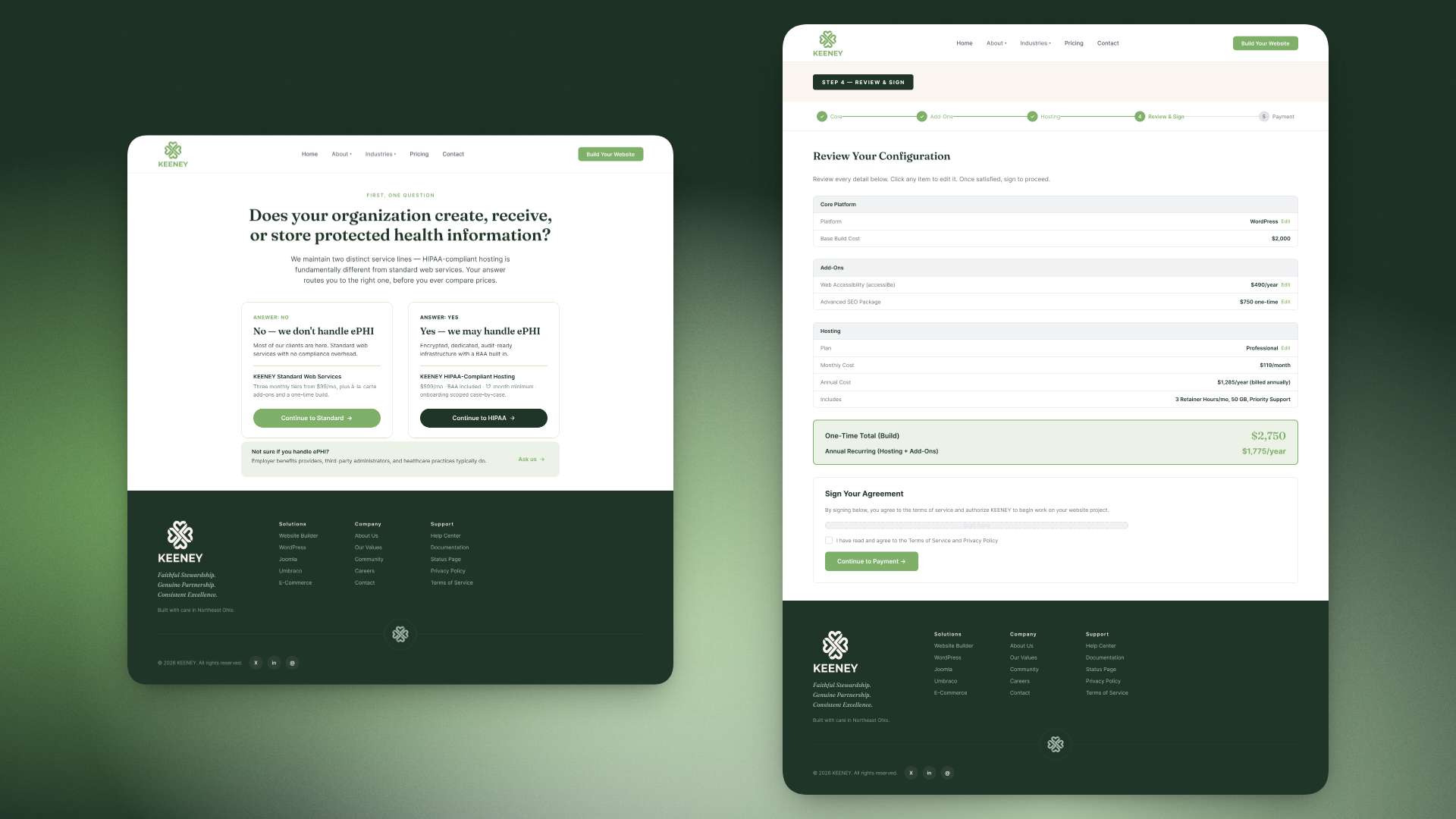
The flow opens with a single routing question before any price appears: does your organization create, receive, or store protected health information? Keeney runs HIPAA-compliant hosting as a separate service line — encrypted, audit-ready, BAA included — not as an add-on to standard web services, and confusing the two would mis-route buyers at the exact moment trust is being established. One plain-language question, two clearly priced paths, and an “ask us” escape hatch for anyone unsure.
From there the flow runs five steps — core platform, add-ons, hosting plan, review and sign, payment — behind a stepper that shows progress and a pricing panel that updates with every choice, so the number on screen is always the real one. The Review step lays the entire configuration out as an editable table: every line item carries its own edit link, the one-time build total and annual recurring costs sit in separate rows, and the agreement is signed right there before payment.
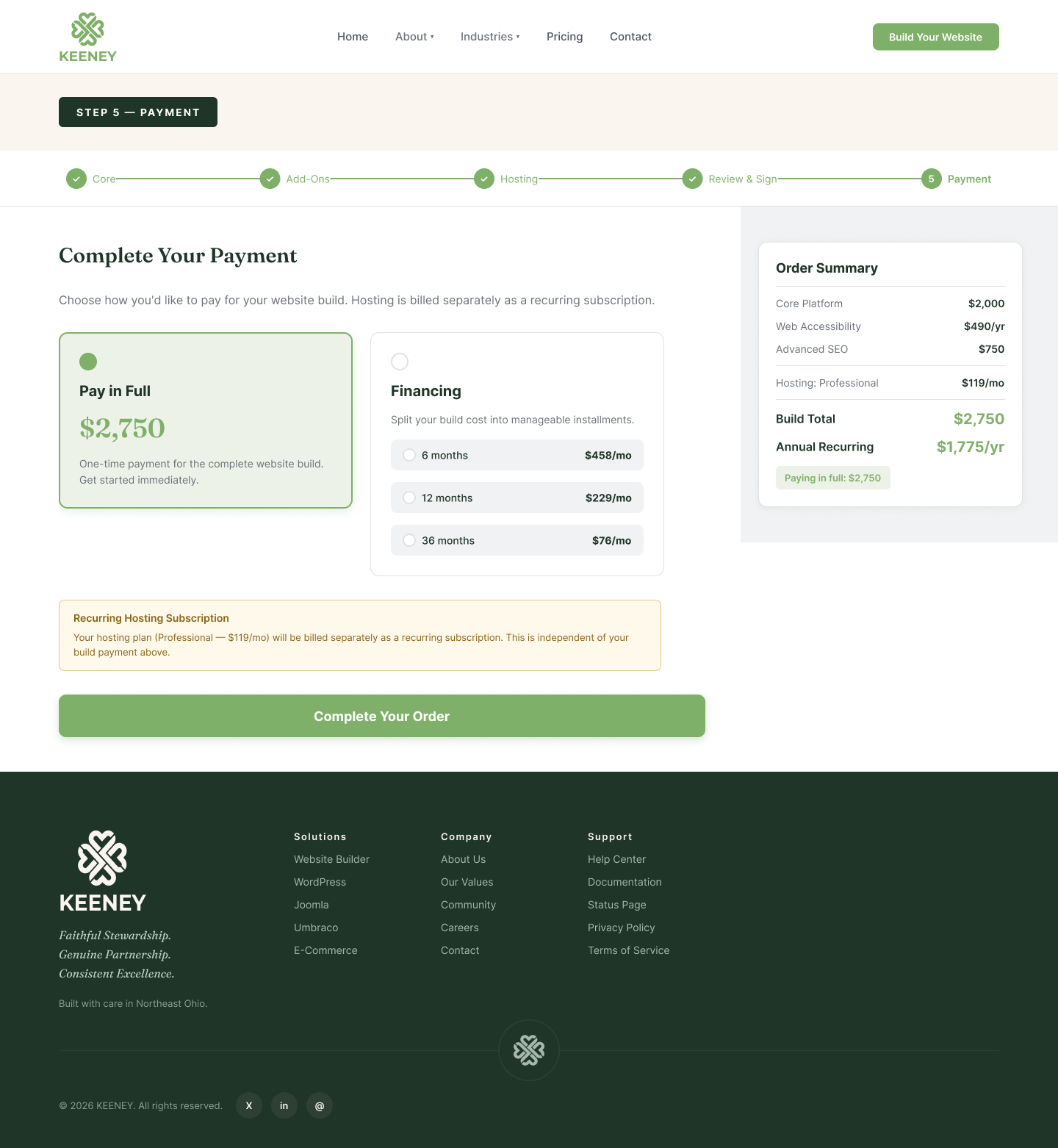
The payment step does the last of the hard work. The order summary keeps build and recurring costs separated to the end, financing splits the build into six, twelve, or thirty-six months with exact monthly figures, and a plain-language notice explains that hosting bills separately as a subscription — the kind of disclosure most checkouts bury, placed where doubt would otherwise creep in.
What changed
The configurator is fully designed as the conversion engine of the Keeney site — the destination of all three mapped user journeys, holding the company’s transparency promise through the exact moment money changes hands.