CHEFED AI
Client:
CHEFED
Project Details
Owner
Release date
Services
Duration
Budget
CHEFED
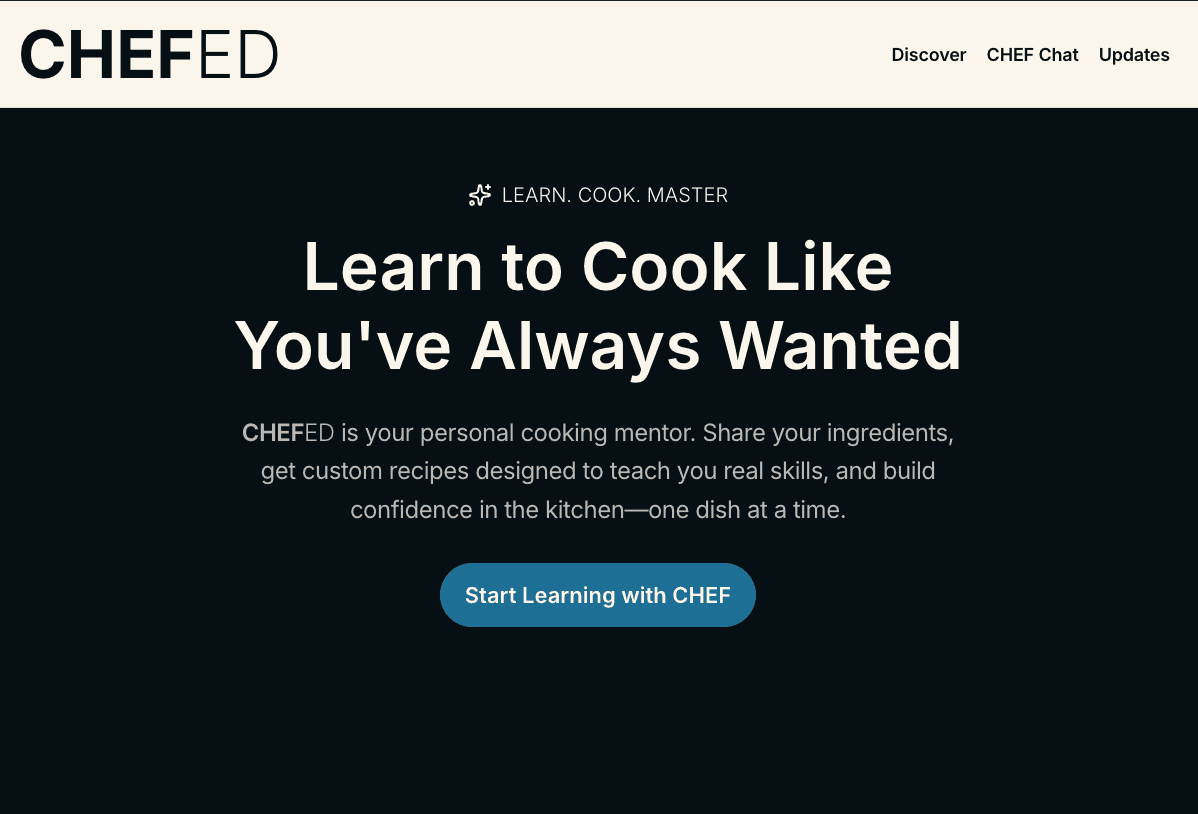
The objective of CHEFED was to design and build an AI-powered cooking product that prioritized culinary integrity, learning, and trust over content volume or novelty. The goal was to create an experience that felt like guidance from a seasoned professional rather than a generic chatbot, while proving that AI could be used as a disciplined system rather than an uncontrolled generator. From a technical perspective, the objective was also to intentionally use AI throughout the design and development process to increase speed and iteration without sacrificing quality, authorship, or decision-making. CHEFED was built as both a functional product and a demonstration of how AI can responsibly support end-to-end product creation.
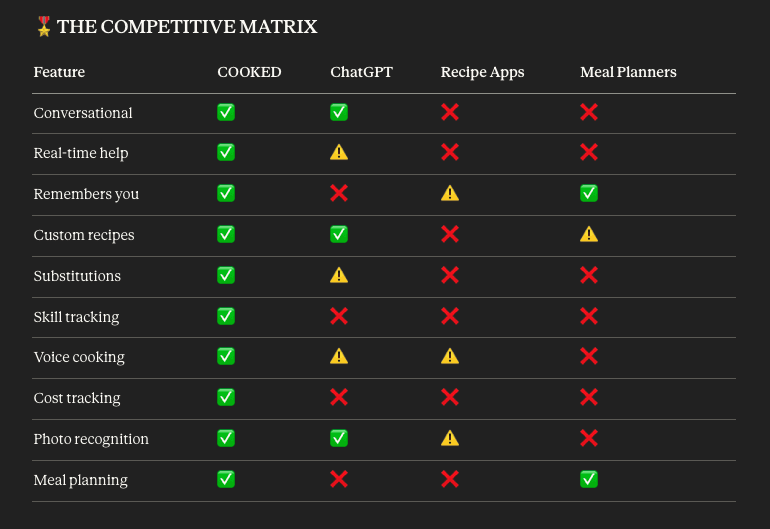
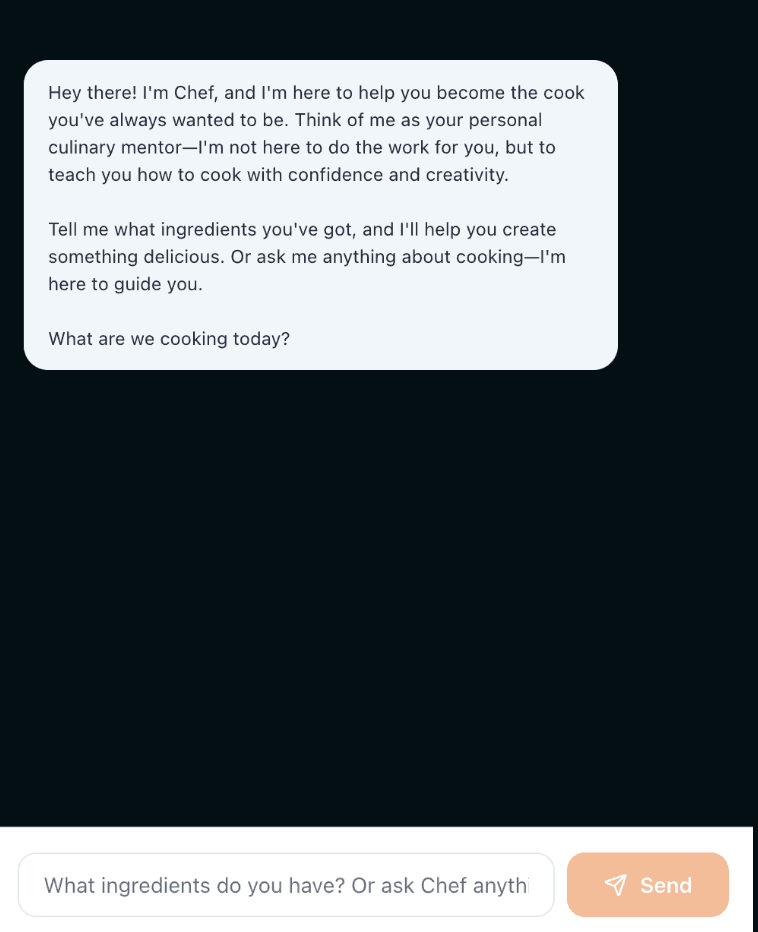
The process began with defining clear constraints around what CHEFED should and should not do. Instead of starting with features, I focused on behavior, tone, and standards. I treated the AI as a product surface that required the same level of UX design as any interface. This included defining when the AI should provide full recipes, when it should explain technique, and when it should refuse a request altogether. Design exploration followed a conversational-first approach. I used AI to rapidly prototype interaction flows, test response pacing, and explore how different tones affected perceived trust and expertise. These explorations informed the final UX and visual design, which intentionally remained minimal and restrained to keep attention on the guidance itself. On the technical side, I designed the AI system as a domain-restricted expert rather than a general chatbot. I implemented prompt-level guardrails that enforced classical technique, ingredient logic, and quality thresholds. Ingredient-based recipe creation was structured around proven culinary reasoning, ensuring that generated recipes remained realistic and professionally sound. AI was also used during development to accelerate front-end implementation, assist with component scaffolding, debugging, and refactoring, and validate accessibility and responsiveness. While AI increased development velocity, all architectural decisions, UX logic, and final outputs were reviewed and refined manually to maintain consistency and quality. Throughout the process, iteration was continuous. The system was repeatedly tested with edge cases, incomplete ingredient lists, and ambiguous user prompts to ensure CHEFED responded with clarity, restraint, and confidence rather than filler or overreach.
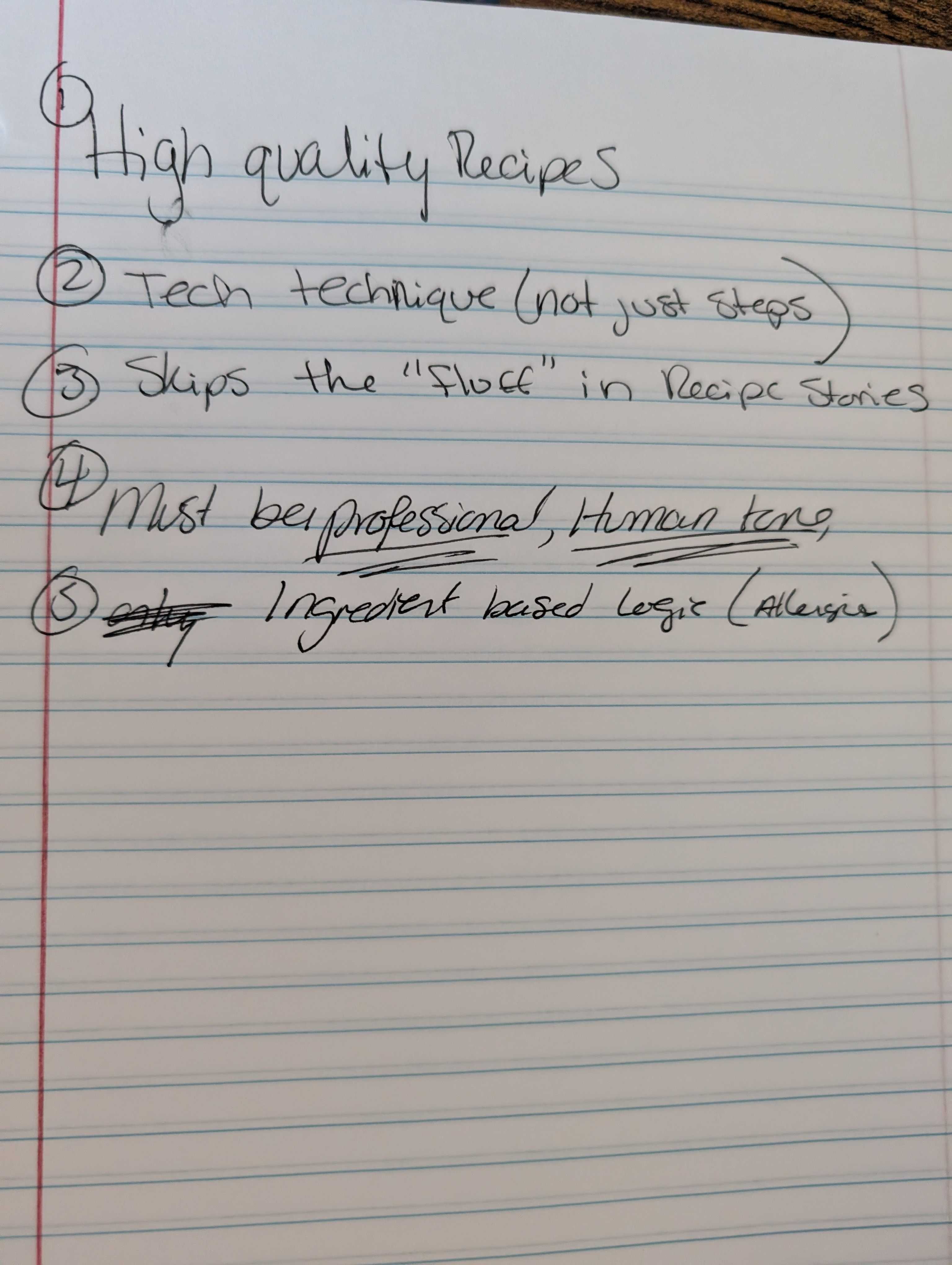
CHEFED resulted in a cohesive, end-to-end product that demonstrates how AI can be integrated thoughtfully across design, development, and user experience. The final product delivers a cooking companion that feels selective, knowledgeable, and human, reinforcing trust through clear standards and intentional refusals rather than unlimited generation. From a design perspective, CHEFED shows how conversational interfaces benefit from strong UX principles, clear behavioral constraints, and tone consistency. From a technical standpoint, it illustrates how AI can be used to meaningfully accelerate development while preserving authorship and system integrity. Most importantly, CHEFED reframes the role of AI in creative domains. Instead of replacing expertise or flooding users with content, the product codifies professional knowledge and makes it accessible in a way that supports learning and confidence. The project serves as both a functional application and a practical example of responsible, high-quality AI product design.